Stories & Memories
War Years
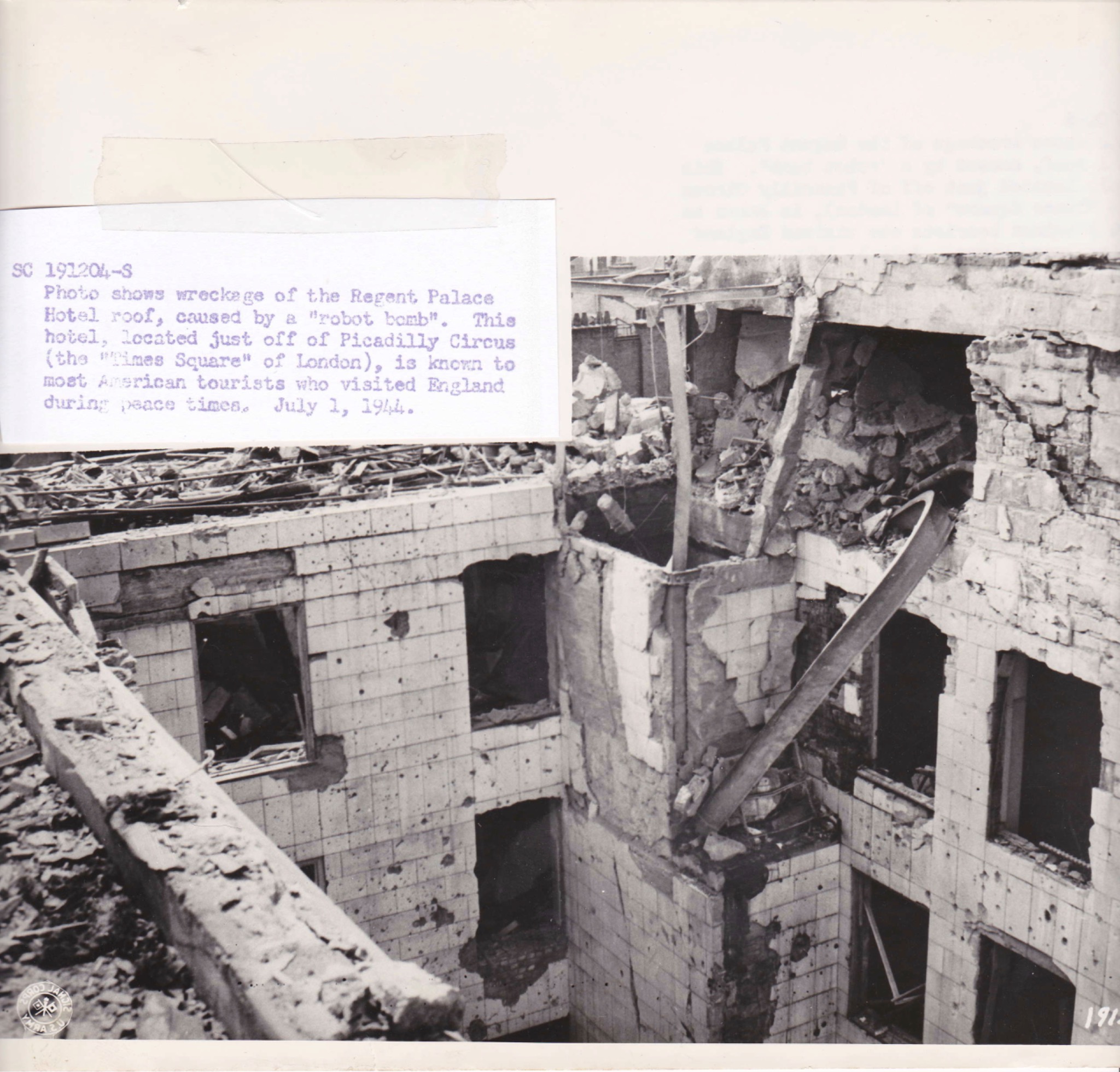
During both World Wars, the Regent Palace Hotel played a role in London's wartime story.
During the First World War, the hotel served as temporary accommodation for military personnel on leave and for soldiers, sailors and airmen just wanting to spend time in London. There were no bombings to speak of, but the soldiers on leave were just out for a good time with the obvious consequences. My most poignant artefact is a letter written in 1916 from the trenches.
The Second World War was a different proposition altogether. The basement areas were allowed for use as an air raid shelter, being two and in parts three floors below ground level. Guests on the upper floors would be evacuated to the basement.
"Despite the bombs falling around Piccadilly Circus, the staff maintained their legendary service standards."
There were two bombings, and on one particularly harrowing night in 1941, a bomb fell just yards from the hotel's entrance, shattering windows throughout the building but miraculously causing no casualties among the 800 guests sheltering inside. The hotel's robust Victorian construction proved its worth during these dark days.
The second bomb was a direct hit on the staff annexe, resulting in one death.
The Lyons Sport Club
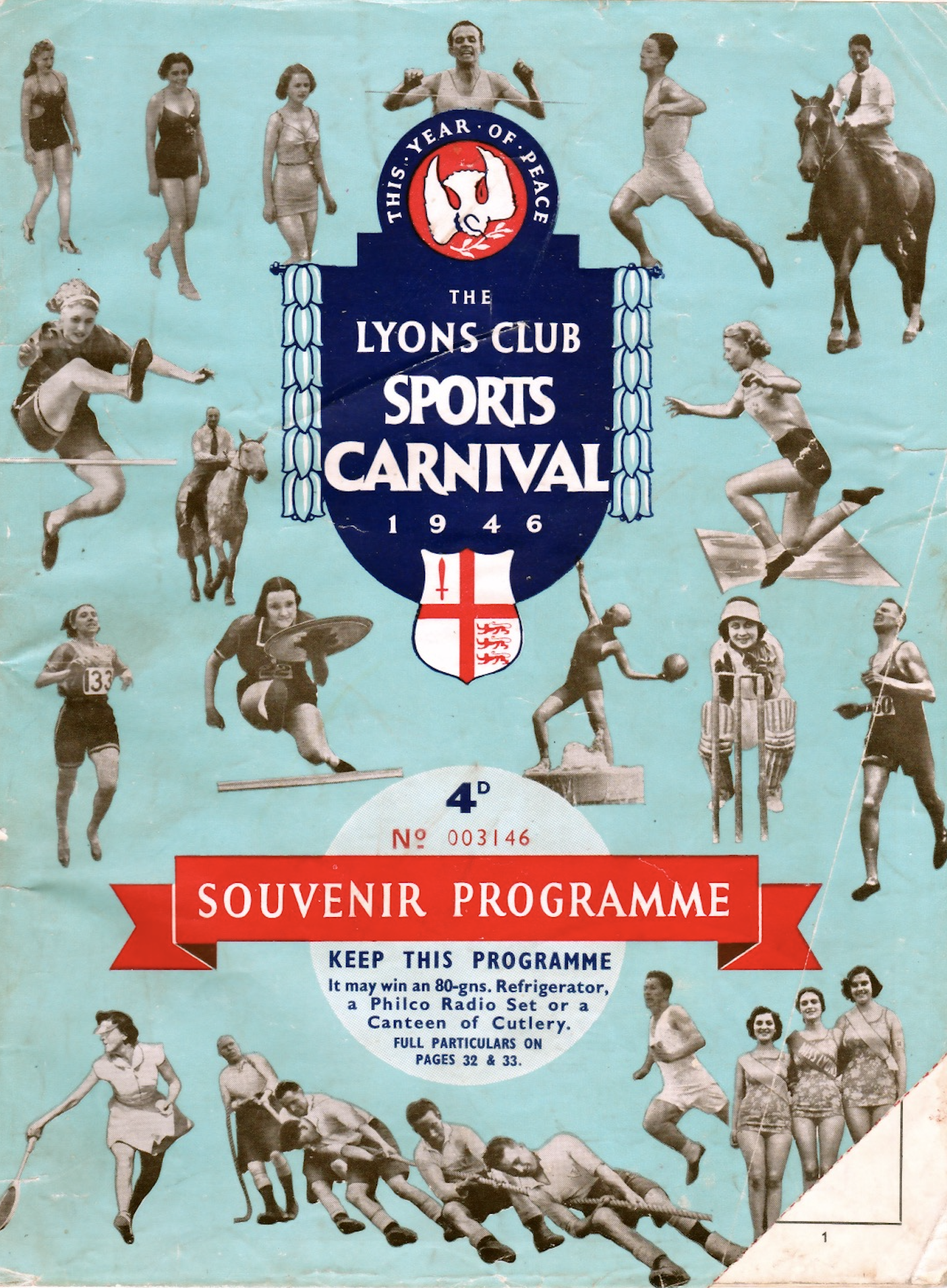
The Lyons Sport Club was one of the most prestigious employee organizations in the UK, located in Sudbury, West London. It's now an independent Sports Club.
The Regent Palace Hotel found itself as the unofficial headquarters for the sporting activities, and the staff who emanated from the many West End establishments - Corner Houses, tea shops, the Trocadero - who were not sufficient in number to create a team of their own, joined the Regent Palace Team.
The Sports club itself was founded and built in 1923. The club featured all the normal sporting activities, but in addition it had its own shooting range, championship standard bowling green, and lawn tennis courts good enough for Wimbledon stars to practice on.
"Every Friday evening, the club's ballroom would come alive with the sounds of the Lyons Sport Club's weekly dance. It was where many romances began and lifelong friendships were forged."
The club's annual sports day was originally held in Hyde Park, until the newly built Club was opened with teams from all Lyons establishments competing. The Regent Palace Hotel team was particularly renowned for their prowess at most sports, winning the inter-company championship five years running in the 1930s. They excelled at Ladies cricket, with one or two players representing the South of England, and the Ladies (again) Tug of War.
During the 1950s, the club expanded to include photography societies, amateur dramatics, and even a chess club that met weekly in Cadby Hall. These activities created a strong sense of community among Lyons employees across London, which included of course the Regent Palace.

The Colonel Barker Affair
One of the most sensational stories connected to the Regent Palace Hotel involved Colonel Victor Barker, who worked at the hotel in 1929. Barker was later revealed to be Valerie Arkell-Smith, a woman who had been living as a man for over a decade.
"The revelation sent shockwaves through London society. Here was someone who had fooled everyone, including the hotel staff who had worked with 'him' for months."
Barker had married a woman while presenting as a man and had even served as a captain in the National Fascisti. https://en.wikipedia.org/wiki/National_Fascisti
He was arrested for a case against him for bankruptcy. He became a media sensation when it came to trial in 1929, with the Regent Palace Hotel mentioned prominently in newspaper reports as where Barker was employed.
The hotel staff later recalled that Barker was always impeccably dressed and extremely courteous, tipping generously and never causing any disturbance. The case highlighted the hotel's role as a meeting place for London's more colourful characters during the interwar period.
More details about this are in my book.
Bad Reputation
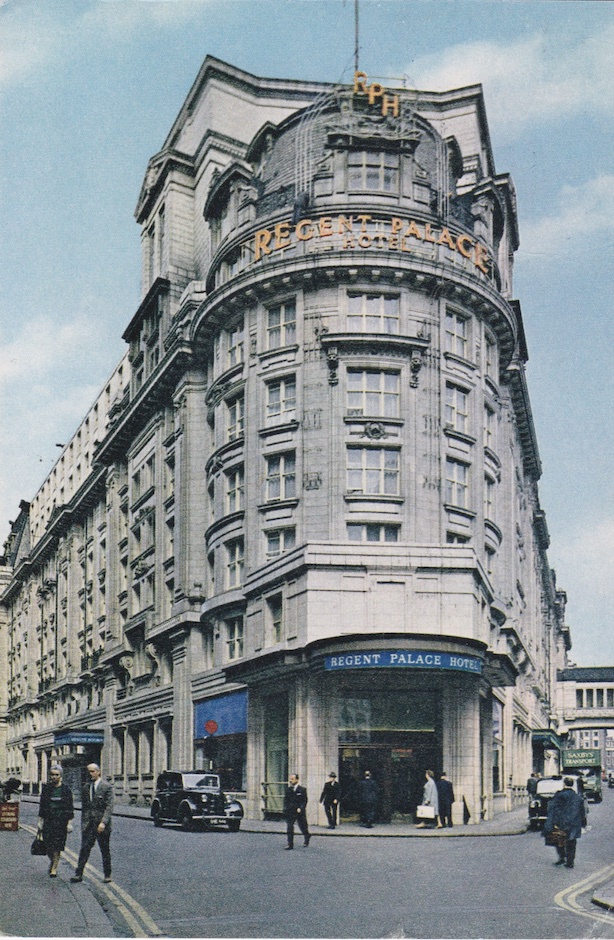
The hotel located next to Soho had always suffered with a reputation for not controlling the number of sex workers from soliciting inside the hotel.
After the Second World War, there was an increase in prostitution throughout the UK and particularly around the West End of London and Soho.
In the early 1950s, the Government appointed John Wolfenden to examine the growing problem of prostitution in the UK and recommend changes to the law. There was much debate, but what followed was the Street Offences Act 1959.
Unfortunately, this legislation was ill-conceived as it did not allow the police to prosecute for soliciting in private premises. The result was that all London's hotels across the board were faced with the problem of identifying those concerned and asking them to leave.
Sometimes the hotel residents looking for sex were persuaded to part with their key so that the sex worker could go ahead in order to get past any checks. If challenged, they had a key and the guest's name. This of course was the worst thing they could do, as when the guest returned, they found they had been robbed.
Despite some isolated incidents, and the introduction of electronic keys, the hotel maintained its reputation for safety and discretion, with management implementing new protocols to ensure guest safety and security while preserving the welcoming atmosphere that made the Regent Palace Hotel famous.
Not renowned for celebrities
The Regent Palace Hotel had a few minor celebrities throughout its history. The earliest, in 1915, being Wilfred Owen, the First World War poet who stayed just before he joined up.
Freddie Starr stayed here during his visits to London in the 1960s/70s, often holding court in the hotel's restaurant with fellow guests. But it was also a favourite location for Jack Solomons, a famous boxing promoter, to put up his boxers who came from far and wide to fight either in Earl's Court or Olympia.
The Rolling Stones tried to get into the Carvery Restaurant (it was the "in" place then) at lunch in the sixties, having been shopping in Carnaby Street. Unfortunately, an overzealous supervisor refused them entry as they were too scruffy looking! OMG, the waitresses nearly fainted.
Much later, Marco Pierre White's restaurant, the Titanic, situated within the hotel but with its own entrance, had its fair share of celebrities: The Spice Girls, the Beckhams, All Saints, Goldie and many more.
The Great Fire Scare of 1952
On a foggy November evening in 1952, a small electrical fire in the hotel's kitchen sparked what became known as "The Great Fire Scare." While the fire was quickly contained, the incident led to a complete evacuation of the hotel's 1,000 guests.
"The sight of guests in their nightclothes standing in Piccadilly Circus at midnight became one of the most memorable images of 1950s London. The fire brigade arrived to find the situation well under control, but the evacuation had already become a spectacle."
The hotel's staff were praised for their calm and efficient handling of the emergency. Within hours, alternative accommodation had been arranged for all guests, and the hotel reopened the following day with improved fire safety measures.
This incident led to the installation of one of London's most advanced fire detection systems, making the Regent Palace Hotel a pioneer in hotel safety standards. The system became a model for other large hotels across the city.
The result of this and additional works over a number of years was the installation of "Raise the Alarm" buttons throughout the hotel. The temptation for someone to set off the alarm was too great and so at least once a week throughout the 90's and onwards someone would set off the alarm for no reason.

The Atlantic Bar and Grill
The Old Grill Room, which had been in existence from the day the hotel opened and which had been upgraded by Oliver Barnard in the 1930s, remained pretty much intact up until 1958/59 when it closed. It remained mothballed apart from when Geoff Duggan and Christopher Salmon's discotheque adventure, "THE CACTUS", was created in part of the space. This was closed by senior management despite the hotel being in the West End: "we don't do discos".
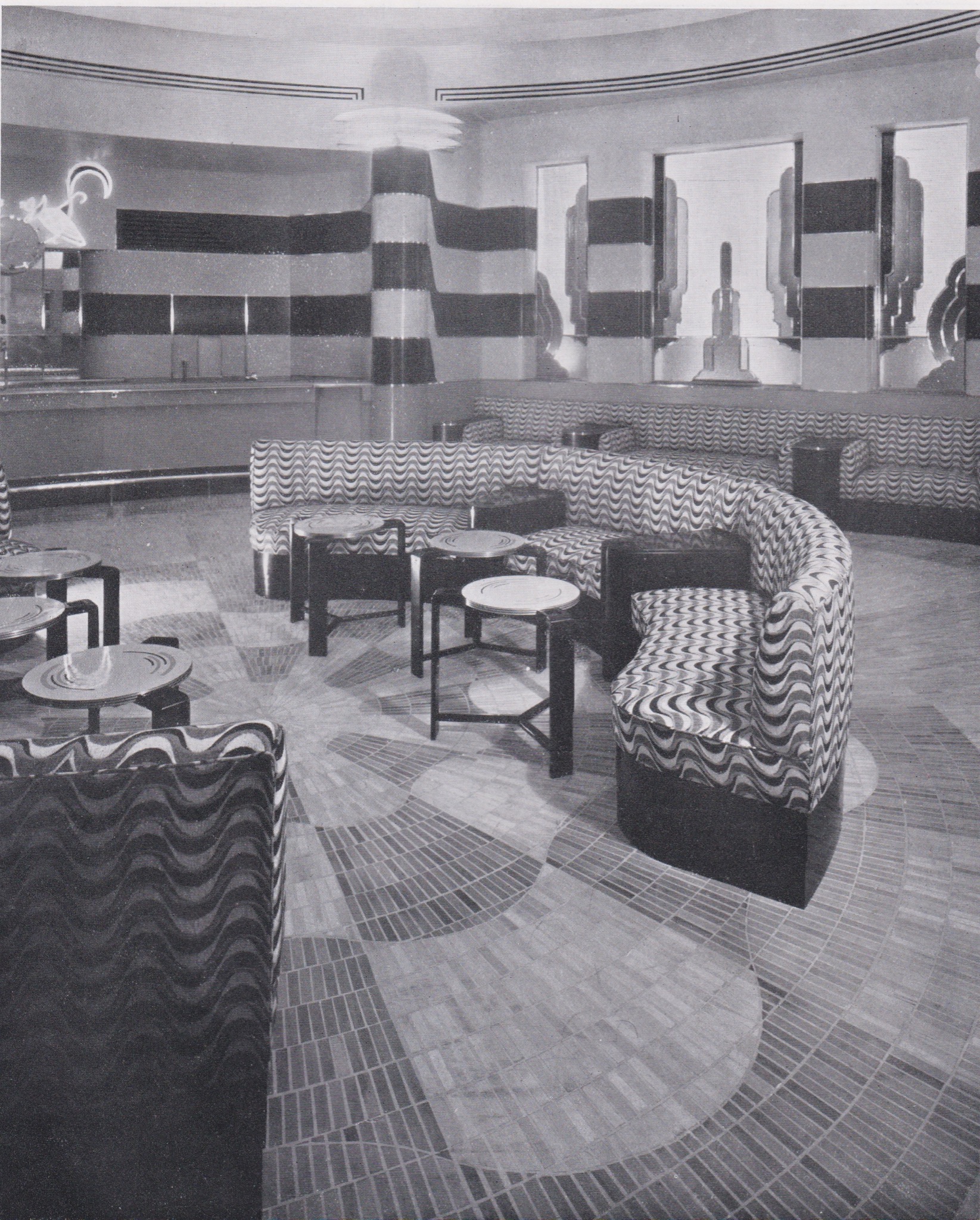
Although the hotel had an uncertain future, when it came to looking at any new project within the area, it was just staggering to think it took an outsider who had vision to see the potential for the space - enter Oliver Peyton. So 33 years after closing the original Grill Room, the Restaurant reopened as The Atlantic Bar and Grill. It was still a beautiful piece of architecture and decoration, with its original Italian marble-clad columns and wood veneers. With the addition of the boxed lighting installed in the 1930s, some felt that it created an Art Deco look.
After it closed, English Heritage put a preservation order on the Restaurant.
And it is now open as Zédel's in the new build office block. You can still see the original designs from the 1930s - it is a staggering space.
The Titanic Restaurant
Within the book, I have a section on two restaurants which opened late in the Hotel's History, which younger readers will remember. This is the second one to open very late on in the hotel's lifespan.
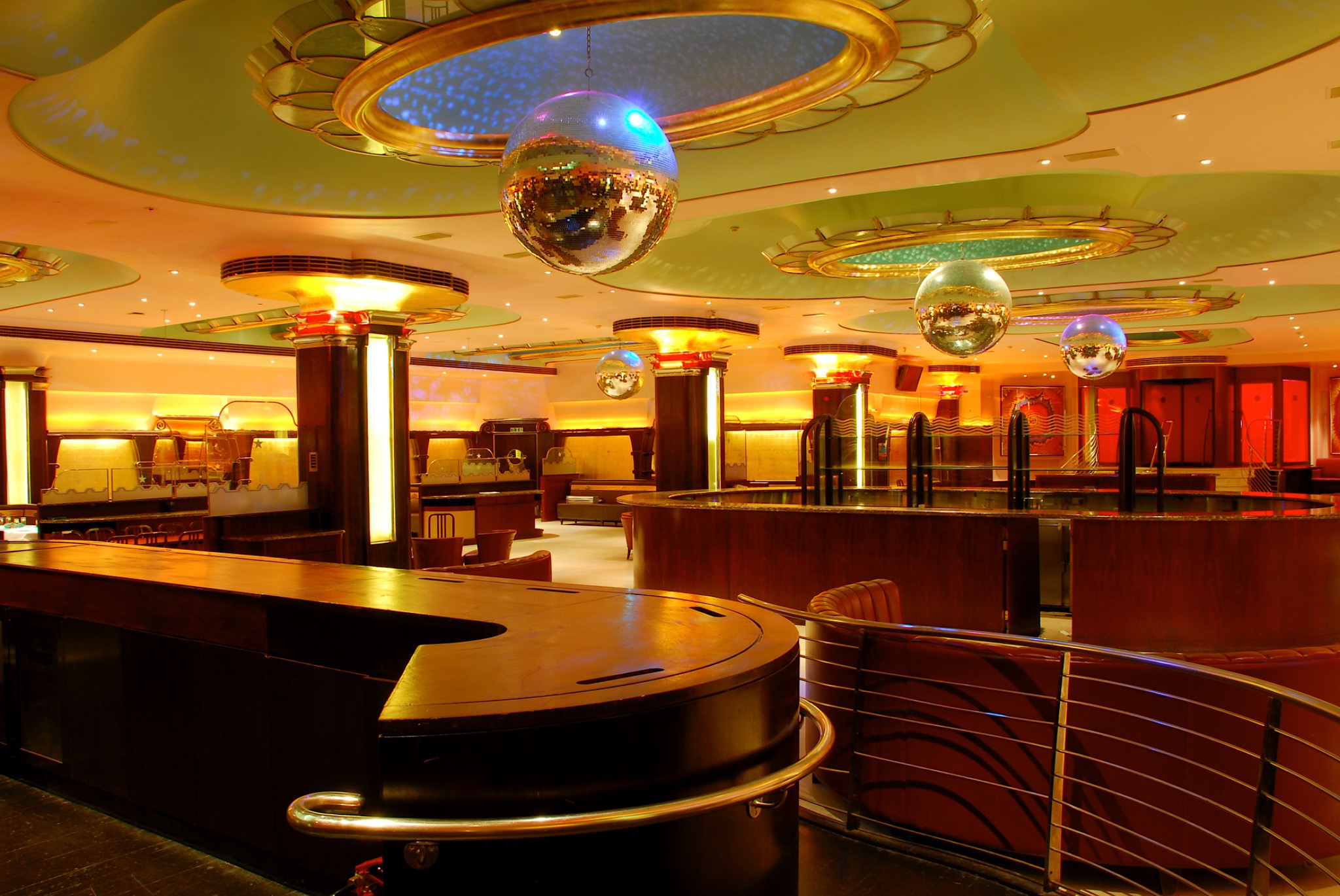
The Titanic restaurant was located in the space where the original main hotel restaurant was in 1915, and then from the 1960's it became the Grill Room and the now famous "Original Carvery". Details of how this concept came about can be found in the book.
Interestingly, it was once again Oliver Barnard's 1930 Art Deco design, ceilings and pillars which formed the basis of a beautiful space. Added to this was Marco Pierre White's Glitter Balls and lots of beautiful leather-type banquet seating. It was a huge space and became an overnight success with London's late night celebrity clubbers.
It had a relatively short life, opening in 1998 and closing in 2002.
English Heritage once again stepped in to save this unique Art Deco design, and it reopened with an entrance on Brewer Street in the new build Office Block as "Mash", an upmarket steak house. This closed in 2021. Next was "Park Row" with its Batman themed restaurant, which closed in 2025.
The latest venture in this protected space is a restaurant with Clay Pigeon Shooting. Opening soon.
The Final Chapter
The hotel's final years from 2003 to 2006 were marked by both nostalgia and determination. Under the management of Leigh Smith, efforts were made to preserve the hotel's character while adapting to modern hospitality standards.
"Every day felt like we were guardians of history. The hotel had seen so much, survived so much, and we were determined to honor that legacy right until the end."
Regular guests who had been coming for decades would share their memories with staff, creating an informal oral history of the hotel. Many spoke of first dates in the restaurant, business deals sealed in the bar, and family celebrations held in the private dining rooms.
The final guest checked out on May 31, 2006, marking the end of 91 years of continuous operation. The closing ceremony was attended by former staff members, regular guests, and local dignitaries, all paying tribute to a London institution that had touched countless lives.